
10.Spring-AOP源码
在线实时更新文档:https://www.yuque.com/geren-t8lyq/ru879g/rxkgtxkusgg2hhd0?singleDoc#
课上流程图:
https://www.processon.com/view/link/68c656dc73573f0d1903425f?cid=68b980be31af7c10c3e06661
课上示例代码:
https://github.com/xulisha123/spring6.2.9/tree/main/tuling/src/main/java/com/xushu/aop
完成流程图:
AOP-切面解析:https://www.processon.com/view/link/5f1958a35653bb7fd24d0aad
AOP-创建代理:https://www.processon.com/view/link/5f1e93f25653bb7fd2549b7c
AOP-调用:https://www.processon.com/view/link/5f4dd513e0b34d1abc735998
** 公众号: 程序员徐庶**
Spring AOP 原理示例说明文档(基于代码实现)
1. 切面解析阶段:从切面信息到可执行通知器
在 Spring AOP 中,切面解析的核心是将横切逻辑(通知)与切入点关联,形成可执行的通知器(Advisor)。本示例中这一过程的实现与 Spring 的核心思想一致:
核心组件协作:
CustomBeforeAdvice和CustomAfterAdvice分别实现了 Spring 的MethodBeforeAdvice和AfterReturningAdvice接口,定义了具体的横切逻辑(前置通知和后置通知)SimplePointcut作为切入点定义,通过ClassFilter.TRUE匹配所有类,其MethodMatcher始终返回true(实际场景中可通过表达式精确匹配更精确的匹配规则)MyInstantiationModelAwarePointcutAdvisorImpl继承自 Spring 的AbstractPointcutAdvisor,将切入点(SimplePointcut)与通知(Advice)封装为Advisor,完成 "在什么地方执行什么增强逻辑" 的绑定
Advice的分类
- Before Advice:方法之前执行
- After returning advice:方法return后执行+后置通知
- After throwing advice:方法抛异常后执行
- After (finally) advice:方法执行完finally之后执行,这是最后的,比return更后
- Around advice:这是功能最强大的Advice,可以自定义执行顺序
Advisor的理解
跟Advice类似的还有一个Advisor的概念,一个Advisor是有一个Pointcut和一个Advice组成的,通过Pointcut可以指定要需要被代理的逻辑,比如一个UserService类中有两个方法,按上面的例子,这两个方法都会被代理,被增强,那么我们现在可以通过Advisor,来控制到具体代理哪一个方法,比如:
- 解析过程: 代码中通过手动创建
List模拟了 Spring 容器的解析过程。在实际 Spring 环境中,容器会通过@Aspect注解扫描或 XML 配置自动识别切面,解析出对应的Pointcut和Advice,并自动组装为Advisorjava运行
// 模拟切面解析为Advisor的过程
List<Advisor> list = new ArrayList<>();
SimplePointcut pointcut = new SimplePointcut();
list.add(new MyInstantiationModelAwarePointcutAdvisorImpl(new CustomBeforeAdvice(), pointcut));
list.add(new MyInstantiationModelAwarePointcutAdvisorImpl(new CustomAfterAdvice(), pointcut));- 匹配筛选: 通过切入点的
ClassFilter对目标类(UserService)进行匹配,筛选出适用于当前目标对象的Advisor,这与 Spring 中 "根据切入点动态筛选适用通知" 的逻辑一致java运行
// 筛选适用于目标类的Advisor
List<Advisor> canApply = list.stream().filter(advisor -> {
    Pointcut pc = ((MyInstantiationModelAwarePointcutAdvisorImpl) advisor).getPointcut();
    return pc.getClassFilter().matches(bean.getClass());
}).collect(Collectors.toList());
2. 代理创建阶段:为目标对象生成代理实例
Spring AOP 通过动态代理实现对目标对象的增强,本示例采用 JDK 动态代理(与 Spring 对实现接口的类的默认处理一致):
代理创建核心: 使用
Proxy.newProxyInstance()创建代理对象,需要三个关键参数:目标对象的类加载器(保证类加载一致性)
目标对象实现的接口(
IUserService):代理对象通过实现相同接口,保证与目标对象具有一致的方法签名自定义调用处理器(
MyInvocationHandler):封装了目标对象和匹配的Advisor,是代理逻辑的核心执行者java运行
IUserService proxy = (IUserService) Proxy.newProxyInstance(
    bean.getClass().getClassLoader(),
    bean.getClass().getInterfaces(), // 基于IUserService接口创建代理
    new MyInvocationHandler(bean, canApply)
);- 与 Spring 的对应关系: 此过程对应 Spring 中
AopProxyFactory的工作:当目标类实现接口时,默认使用 JDK 动态代理(如示例);若目标类未实现接口,则使用 CGLIB 代理(通过继承目标类实现)。MyInvocationHandler的角色类似于 Spring 中的JdkDynamicAopProxy,负责协调通知执行与目标方法调用
3. 代理调用阶段:拦截方法执行并应用通知链
当通过代理对象调用方法时,会触发代理逻辑,按顺序执行通知与目标方法,这一过程完全遵循 Spring AOP 的拦截器链模式:
拦截器链构建:
MyInvocationHandler将Advisor中的通知转换为MethodInterceptor(拦截器),统一通知的执行接口。其中:MethodBeforeAdvice被转换为MethodBeforeAdviceInterceptorAfterReturningAdvice被转换为AfterReturningAdviceInterceptor这与 Spring 的
AdvisorAdapter机制一致,通过适配器模式将不同类型的通知统一为拦截器接口java运行
// 通知转换为拦截器
List<MethodInterceptor> interceptors = canApply.stream()
    .map(advisor -> {
        if (advisor.getAdvice() instanceof MethodBeforeAdvice) {
            return new MethodBeforeAdviceInterceptor((MethodBeforeAdvice) advisor.getAdvice());
        }
        if (advisor.getAdvice() instanceof AfterReturningAdvice) {
            return new AfterReturningAdviceInterceptor((AfterReturningAdvice) advisor.getAdvice());
        }
        return null;
    })
.collect(Collectors.toList());- 调用链执行流程:
MyMethodInvocation模拟了 Spring 的ReflectiveMethodInvocation,通过proceed()方法实现拦截器的链式调用:
- 执行第一个拦截器(前置通知拦截器),触发
CustomBeforeAdvice.before() - 调用
proceed()进入下一个拦截器(后置通知拦截器) - 当所有拦截器执行完毕,通过
method.invoke(target, args)调用目标方法(UserService.addUser()) - 目标方法返回后,回溯执行后置通知拦截器,触发
CustomAfterAdvice.afterReturning()
- java运行
// 调用链执行核心逻辑
public Object proceed() throws Throwable {
    if (i == list.size()) {
        // 所有拦截器执行完毕,调用目标方法
        return getMethod().invoke(target, getArguments());
    }
    // 执行下一个拦截器
    MethodInterceptor mi = list.get(i);
    i++;
    return mi.invoke(this);
}- 执行结果: 最终调用
proxy.addUser("xushu")会输出:plaintext
[前置Advice] 方法 addUser 即将执行,参数: [xushu]
添加用户:xushu
[后置Advice] 方法 addUser 执行完成,返回值: addUserxushu
清晰展示了 "前置通知→目标方法→后置通知" 的执行顺序,与 Spring AOP 的通知执行规则完全一致
总结
本示例完整复现了 Spring AOP 的核心工作流程:
- 切面解析阶段:将通知与切入点绑定为
Advisor,确定增强的位置和逻辑 - 代理创建阶段:通过动态代理为目标对象生成代理实例,代理对象持有增强逻辑
- 代理调用阶段:通过拦截器链按序执行通知与目标方法,实现横切逻辑的织入
这一过程实现了业务逻辑(UserService)与横切逻辑(通知)的解耦,是 Spring AOP"面向切面编程" 思想的直观体现。
spring aop源码解析
我们知道,spring中的aop是通过动态代理实现的,那么他具体是如何实现的呢?spring通过一个切面类,在他的类上加入@Aspect注解,定义一个Pointcut方法,最后定义一系列的增强方法。这样就完成一个对象的切面操作。
那么思考一下,按照上述的基础,要实现我们的aop,大致有以下思路:
1.找到所有的切面类
2.解析出所有的advice并保存
3.创建一个动态代理类
4.调用被代理类的方法时,找到他的所有增强器,并增强当前的方法
那么下面通过源码验证一下我们的猜测:
一、切面类的解析
详细流程图:
https://www.processon.com/view/link/5f1958a35653bb7fd24d0aad
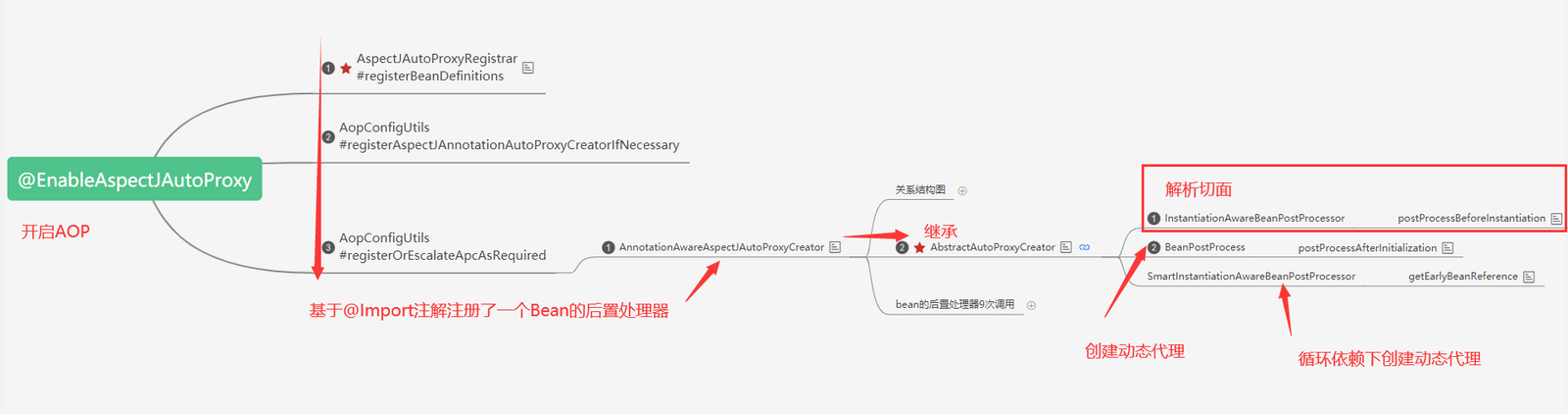
spring通过@EnableAspectJAutoProxy开启aop切面,在注解类上面发现@Import(AspectJAutoProxyRegistrar.class),AspectJAutoProxyRegistrar实现了ImportBeanDefinitionRegistrar,所以他会通过registerBeanDefinitions方法为我们容器导入beanDefinition。
进入解析切面的过程:

postProcessBeforeInstantiation是在任意bean创建的时候就调用了
org.springframework.beans.factory.support.AbstractAutowireCapableBeanFactory#resolveBeforeInstantiation
org.springframework.beans.factory.support.AbstractAutowireCapableBeanFactory#applyBeanPostProcessorsBeforeInstantiation
org.springframework.beans.factory.config.InstantiationAwareBeanPostProcessor#postProcessBeforeInstantiation
org.springframework.aop.framework.autoproxy.AbstractAutoProxyCreator#postProcessBeforeInstantiation
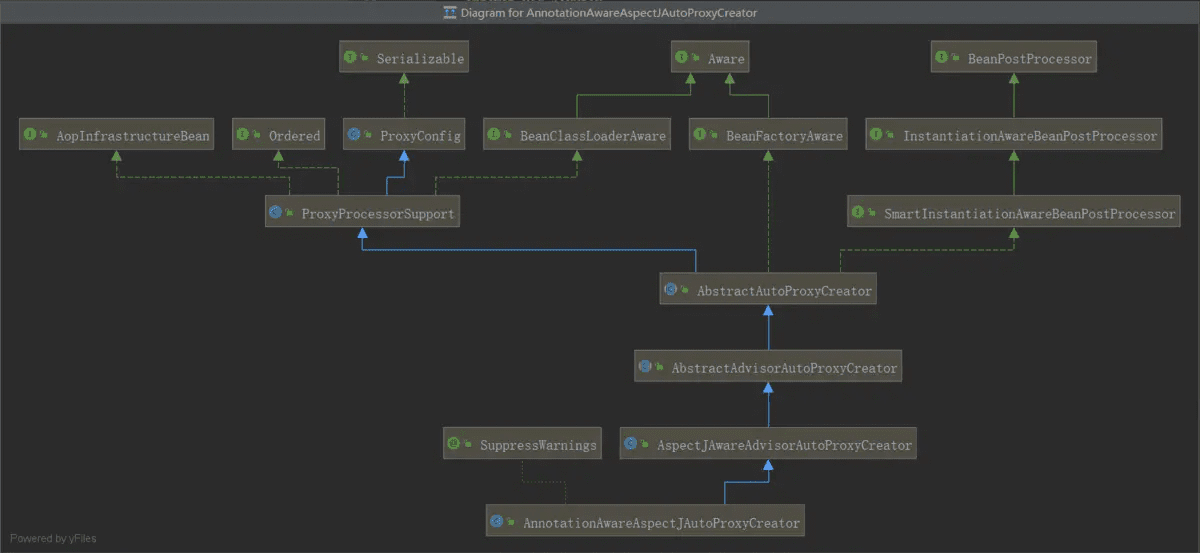
追踪一下源码可以看到最终导入AnnotationAwareAspectJAutoProxyCreator,我们看一下他的类继承关系图,发现它实现了两个重要的接口,BeanPostProcessor和InstantiationAwareBeanPostProcessor
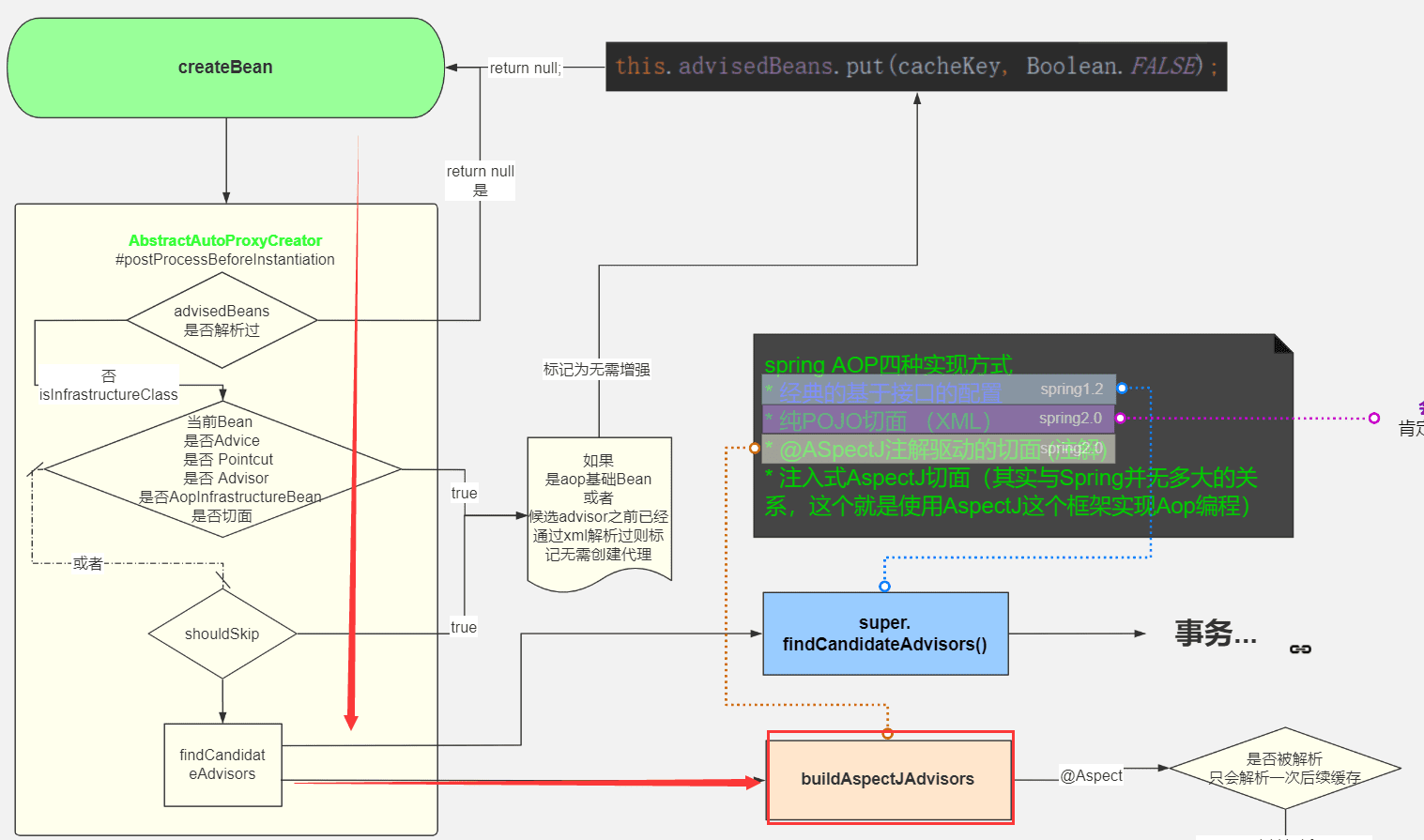
首先看InstantiationAwareBeanPostProcessor的postProcessBeforeInstantiation方法
Object postProcessBeforeInstantiation(Class<?> beanClass, String beanName)(InstantiationAwareBeanPostProcessor)
org.springframework.aop.framework.autoproxy.AbstractAutoProxyCreator#postProcessBeforeInstantiation
org.springframework.aop.aspectj.autoproxy.AspectJAwareAdvisorAutoProxyCreator#shouldSkip
org.springframework.aop.aspectj.annotation.AnnotationAwareAspectJAutoProxyCreator#findCandidateAdvisors
org.springframework.aop.aspectj.annotation.BeanFactoryAspectJAdvisorsBuilder#buildAspectJAdvisors
public List<Advisor> buildAspectJAdvisors() {
                 //获取缓存中的aspectBeanNames
        List<String> aspectNames = this.aspectBeanNames;

        if (aspectNames == null) {
            synchronized (this) {
                aspectNames = this.aspectBeanNames;
                if (aspectNames == null) {
                    List<Advisor> advisors = new ArrayList<>();
                    aspectNames = new ArrayList<>();
                          //获取beanFactory中所有的beanNames
                    String[] beanNames = BeanFactoryUtils.beanNamesForTypeIncludingAncestors(
                            this.beanFactory, Object.class, true, false);
                    for (String beanName : beanNames) {
                        if (!isEligibleBean(beanName)) {
                            continue;
                        }
                        // We must be careful not to instantiate beans eagerly as in this case they
                        // would be cached by the Spring container but would not have been weaved.
                        Class<?> beanType = this.beanFactory.getType(beanName);
                        if (beanType == null) {
                            continue;
                        }
                        //找出所有类上面含@Aspect注解的beanName
                        if (this.advisorFactory.isAspect(beanType)) {
                        //将找到的beanName放入aspectNames集合
                            aspectNames.add(beanName);
                            AspectMetadata amd = new AspectMetadata(beanType, beanName);
                            if (amd.getAjType().getPerClause().getKind() == PerClauseKind.SINGLETON) {
                                MetadataAwareAspectInstanceFactory factory =
                                        new BeanFactoryAspectInstanceFactory(this.beanFactory, beanName);
                          //1.找到切面类的所有但是不包括@Pointcut注解的方法
                           //2.筛选出来包含@Around, @Before, @After,@ AfterReturning, @AfterThrowing注解的方法
                          //3.封装为List<Advisor>返回
                                List<Advisor> classAdvisors = this.advisorFactory.getAdvisors(factory);
                                if (this.beanFactory.isSingleton(beanName)) {
                            //将上面找出来的Advisor按照key为beanName,value为List<Advisor>的形式存入advisorsCache
                                    this.advisorsCache.put(beanName, classAdvisors);
                                }
                                else {
                                    this.aspectFactoryCache.put(beanName, factory);
                                }
                                advisors.addAll(classAdvisors);
                            }
                            else {
                                // Per target or per this.
                                if (this.beanFactory.isSingleton(beanName)) {
                                    throw new IllegalArgumentException("Bean with name '" + beanName +
                                            "' is a singleton, but aspect instantiation model is not singleton");
                                }
                                MetadataAwareAspectInstanceFactory factory =
                                        new PrototypeAspectInstanceFactory(this.beanFactory, beanName);
                                this.aspectFactoryCache.put(beanName, factory);
                                advisors.addAll(this.advisorFactory.getAdvisors(factory));
                            }
                        }
                    }
                    this.aspectBeanNames = aspectNames;
                    return advisors;
                }
            }
        }

        if (aspectNames.isEmpty()) {
            return Collections.emptyList();
        }
        List<Advisor> advisors = new ArrayList<>();
        for (String aspectName : aspectNames) {
            //当再次进入该方法,会直接从advisorsCache缓存中获取
            List<Advisor> cachedAdvisors = this.advisorsCache.get(aspectName);
            if (cachedAdvisors != null) {
                advisors.addAll(cachedAdvisors);
            }
            else {
                MetadataAwareAspectInstanceFactory factory = this.aspectFactoryCache.get(aspectName);
                advisors.addAll(this.advisorFactory.getAdvisors(factory));
            }
        }
        return advisors;
    }
流程图:
解析的步骤:
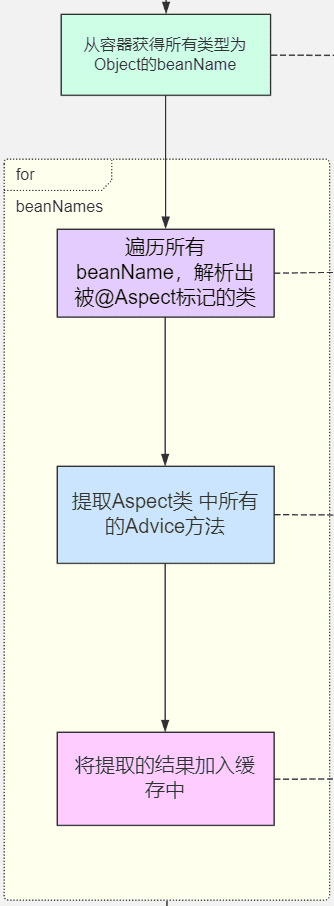
最终将解析出来的advisor放入缓存,这里思考清楚 advisor和advise的区别
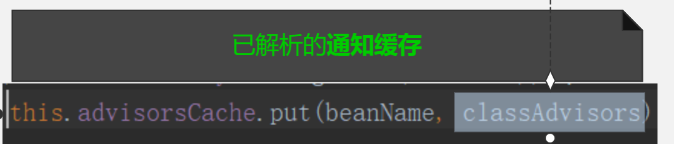
其实就是我们切面中的通知方法:

二、创建代理
进入创建代理的过程:

postProcessAfterInitialization是在bean创建完成之后执行的
org.springframework.beans.factory.support.AbstractAutowireCapableBeanFactory#doCreateBean
org.springframework.beans.factory.support.AbstractAutowireCapableBeanFactory#initializeBean(java.lang.String, java.lang.Object, org.springframework.beans.factory.support.RootBeanDefinition)
org.springframework.beans.factory.support.AbstractAutowireCapableBeanFactory#applyBeanPostProcessorsAfterInitialization
org.springframework.beans.factory.config.BeanPostProcessor#postProcessAfterInitialization
org.springframework.aop.framework.autoproxy.AbstractAutoProxyCreator#postProcessAfterInitialization
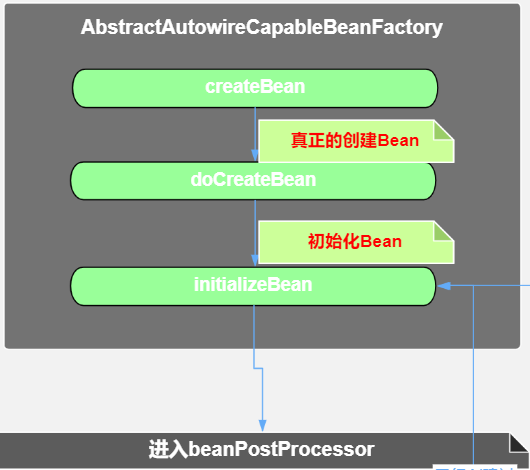
详细流程图:
https://www.processon.com/view/link/5f1e93f25653bb7fd2549b7c
1.获取advisors:创建代理之前首先要判断当前bean是否满足被代理, 所以需要将advisor从之前的缓存中拿出来和当前bean 根据表达式进行匹配:
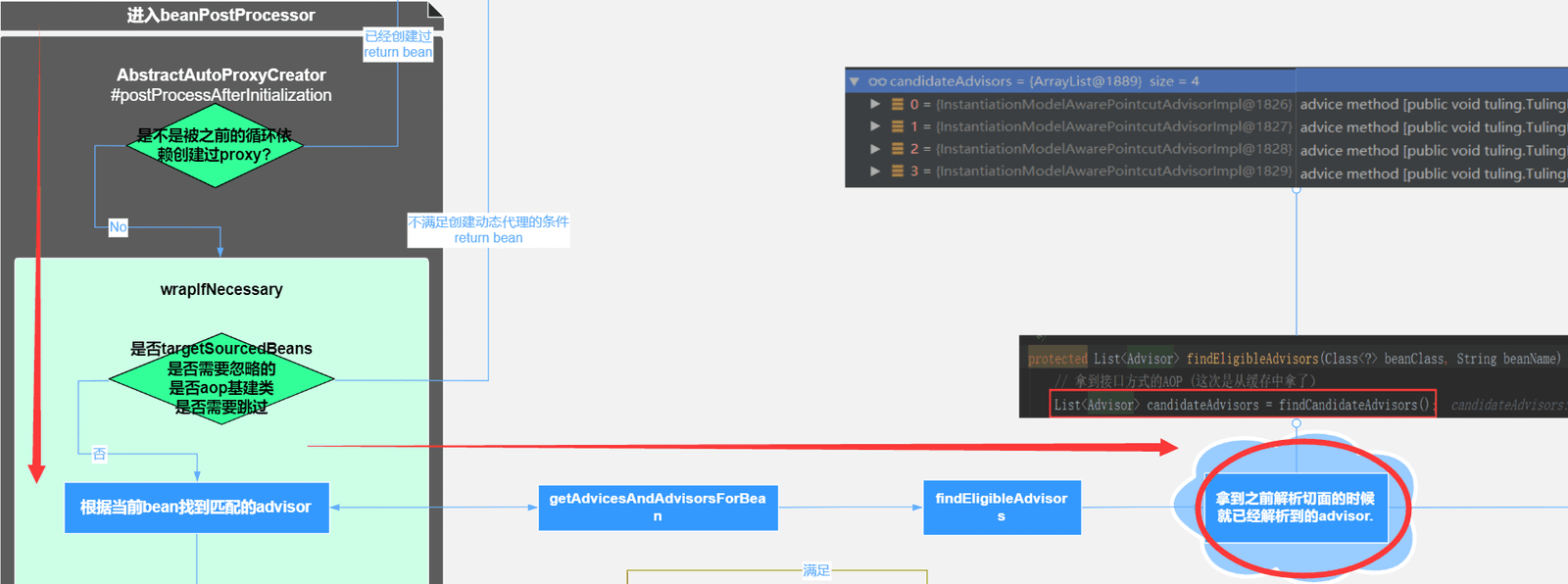
Object postProcessAfterInitialization(@Nullable Object bean, String beanName)(BeanPostProcessor)
org.springframework.aop.framework.autoproxy.AbstractAutoProxyCreator#postProcessAfterInitialization
org.springframework.aop.framework.autoproxy.AbstractAutoProxyCreator#wrapIfNecessary
org.springframework.aop.framework.autoproxy.AbstractAdvisorAutoProxyCreator#getAdvicesAndAdvisorsForBean
org.springframework.aop.aspectj.annotation.AnnotationAwareAspectJAutoProxyCreator#findCandidateAdvisors
上述代码的链路最终到了findCandidateAdvisors,我们发现在postProcessBeforeInstantiation方法中对查找到的Advisors做了缓存,所以这里只需要从缓存中取就好了
最后创建代理类,并将Advisors赋予代理类,缓存当前的代理类
2.匹配:根据advisors和当前的bean根据切点表达式进行匹配,看是否符合。
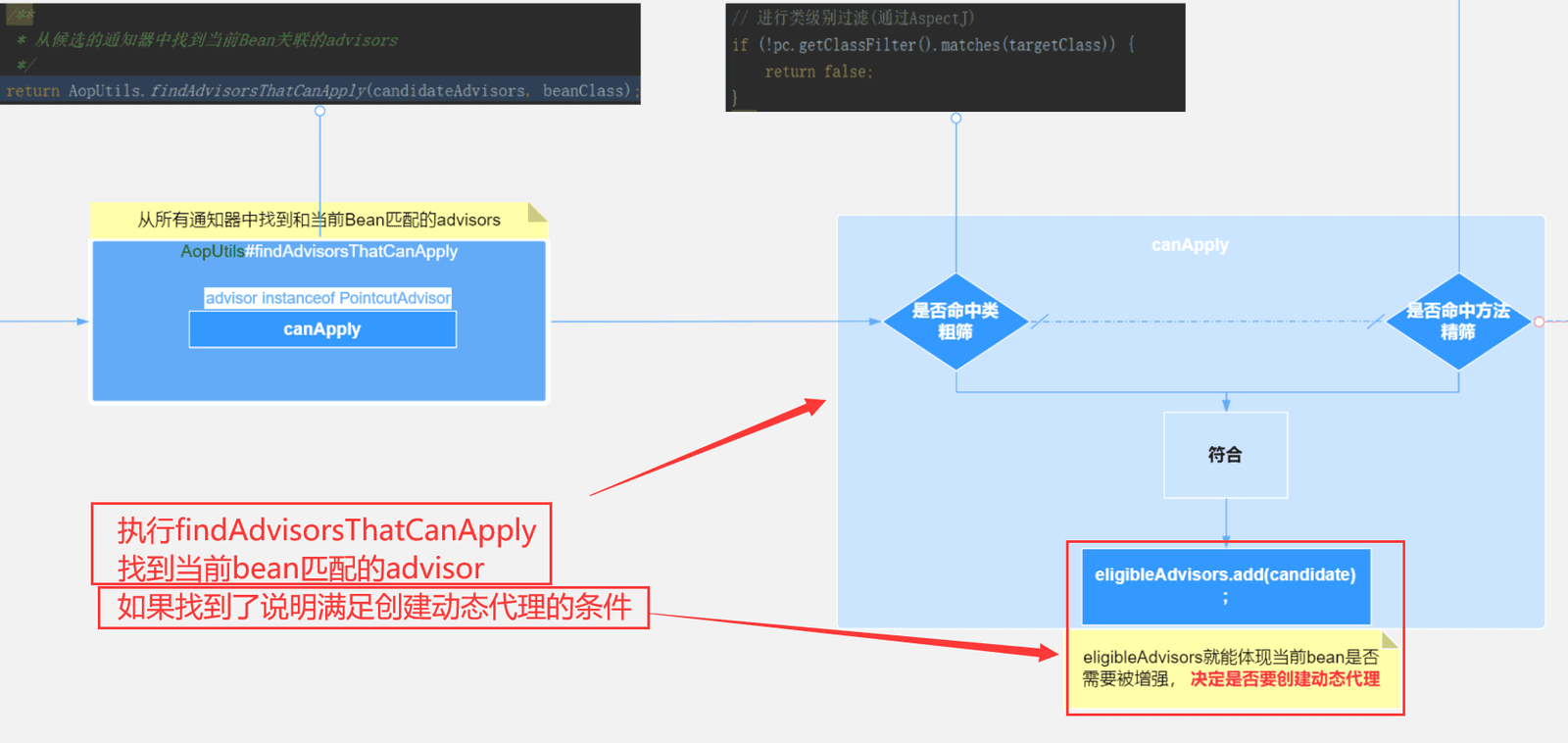
org.springframework.aop.framework.autoproxy.AbstractAdvisorAutoProxyCreator#findAdvisorsThatCanApply
org.springframework.aop.support.AopUtils#findAdvisorsThatCanApply
org.springframework.aop.support.AopUtils#canApply(org.springframework.aop.Advisor, java.lang.Class<?>, boolean) 拿到PointCut
org.springframework.aop.support.AopUtils#canApply(org.springframework.aop.Pointcut, java.lang.Class<?>, boolean)
org.springframework.aop.ClassFilter#matches 粗筛
org.springframework.aop.IntroductionAwareMethodMatcher#matches 精筛
3.创建代理:找到了 和当前Bean匹配的advisor说明满足创建动态代理的条件:
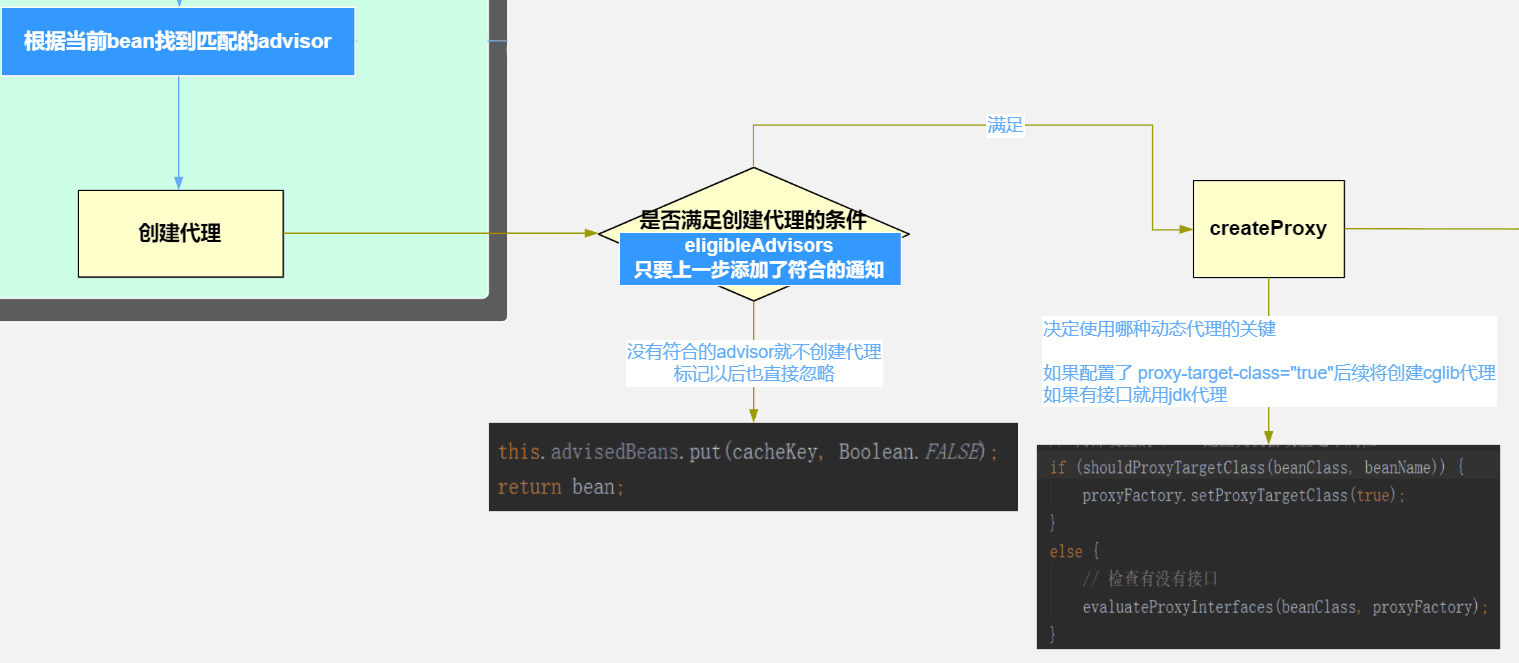
Object proxy = createProxy(
                    bean.getClass(), beanName, specificInterceptors, new SingletonTargetSource(bean));
this.proxyTypes.put(cacheKey, proxy.getClass());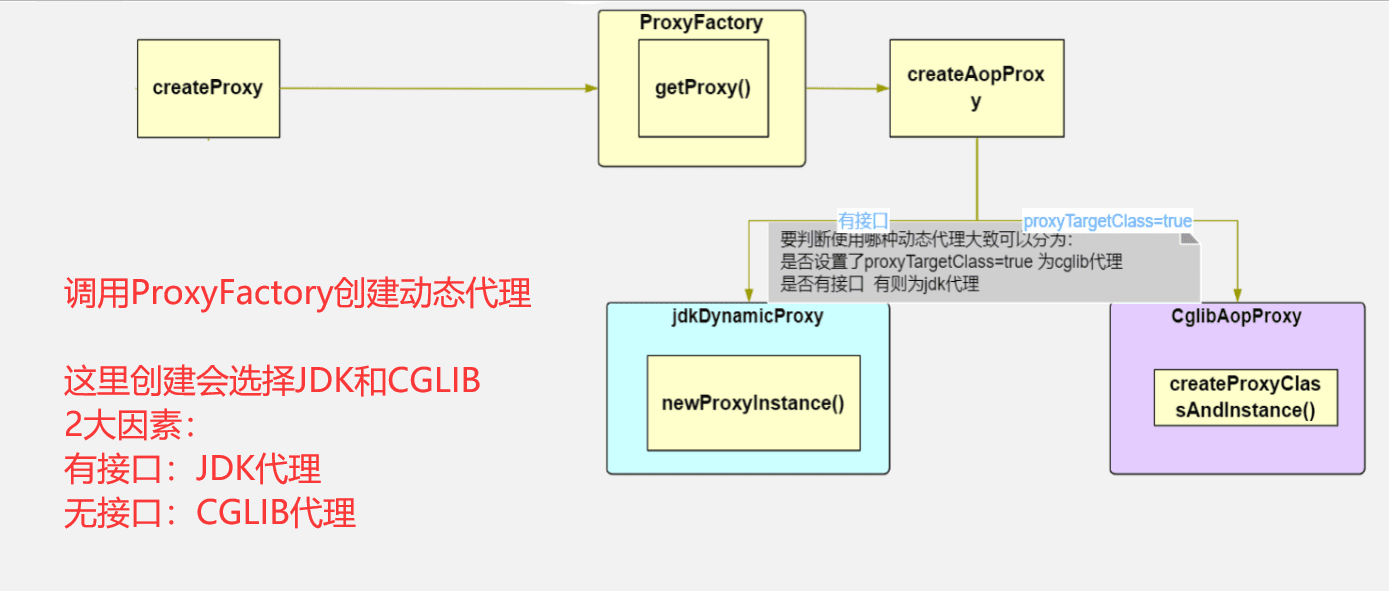
理解了上面两个重要的方法,我们只需要将他与创建bean的流程联系起来就可以知道代理对象创建的整个流程了,在before和after方法分别放置断点,我们可以看到他的整个调用链路
三、代理类的调用
详细流程图:
https://www.processon.com/view/link/5f4dd513e0b34d1abc735998
前面的分析可知,spring将找到的增强器Advisors赋予了代理类,那么在执行只要将这些增强器应用到被代理的类上面就可以了,那么spring具体是怎么实现的呢,下面我们以jdk代理为例分析一下源码:
public Object invoke(Object proxy, Method method, Object[] args) throws Throwable {
        MethodInvocation invocation;
        Object oldProxy = null;
        boolean setProxyContext = false;
                 //获取当前被代理类
        TargetSource targetSource = this.advised.targetSource;
        Object target = null;
                // equals,hashcode等方法不做代理,直接调用
        try {
            if (!this.equalsDefined && AopUtils.isEqualsMethod(method)) {
                // The target does not implement the equals(Object) method itself.
                return equals(args[0]);
            }
            else if (!this.hashCodeDefined && AopUtils.isHashCodeMethod(method)) {
                // The target does not implement the hashCode() method itself.
                return hashCode();
            }
            else if (method.getDeclaringClass() == DecoratingProxy.class) {
                // There is only getDecoratedClass() declared -> dispatch to proxy config.
                return AopProxyUtils.ultimateTargetClass(this.advised);
            }
            else if (!this.advised.opaque && method.getDeclaringClass().isInterface() &&
                    method.getDeclaringClass().isAssignableFrom(Advised.class)) {
                // Service invocations on ProxyConfig with the proxy config...
                return AopUtils.invokeJoinpointUsingReflection(this.advised, method, args);
            }

            Object retVal;
                        // 将代理对象放到线程本地变量中
            if (this.advised.exposeProxy) {
                // Make invocation available if necessary.
                oldProxy = AopContext.setCurrentProxy(proxy);
                setProxyContext = true;
            }

            // Get as late as possible to minimize the time we "own" the target,
            // in case it comes from a pool.
            target = targetSource.getTarget();
            Class<?> targetClass = (target != null ? target.getClass() : null);

                        //将增加器装换为方法执行拦截器链
            List<Object> chain = this.advised.getInterceptorsAndDynamicInterceptionAdvice(method, targetClass);

            // Check whether we have any advice. If we don't, we can fallback on direct
            // reflective invocation of the target, and avoid creating a MethodInvocation.
            if (chain.isEmpty()) {
                // We can skip creating a MethodInvocation: just invoke the target directly
                // Note that the final invoker must be an InvokerInterceptor so we know it does
                // nothing but a reflective operation on the target, and no hot swapping or fancy proxying.
                Object[] argsToUse = AopProxyUtils.adaptArgumentsIfNecessary(method, args);
                retVal = AopUtils.invokeJoinpointUsingReflection(target, method, argsToUse);
            }
            else {
                //将拦截器链包装为ReflectiveMethodInvocation并执行
                invocation = new ReflectiveMethodInvocation(proxy, target, method, args, targetClass, chain);
                retVal = invocation.proceed();
            }

            // Massage return value if necessary.
            Class<?> returnType = method.getReturnType();
            if (retVal != null && retVal == target &&
                    returnType != Object.class && returnType.isInstance(proxy) &&
                    !RawTargetAccess.class.isAssignableFrom(method.getDeclaringClass())) {
                // Special case: it returned "this" and the return type of the method
                // is type-compatible. Note that we can't help if the target sets
                // a reference to itself in another returned object.
                retVal = proxy;
            }
            else if (retVal == null && returnType != Void.TYPE && returnType.isPrimitive()) {
                throw new AopInvocationException(
                        "Null return value from advice does not match primitive return type for: " + method);
            }
            return retVal;
        }
        finally {
            if (target != null && !targetSource.isStatic()) {
                // Must have come from TargetSource.
                targetSource.releaseTarget(target);
            }
            if (setProxyContext) {
                // Restore old proxy.
                AopContext.setCurrentProxy(oldProxy);
            }
        }
    }
通过上面代码可知,将增强器装换为方法拦截器链,最终包装为ReflectiveMethodInvocation执行它的proceed方法,那么我们就来看下具体如果执行
public Object proceed() throws Throwable {
        //  当执行到最后一个拦截器的时候才会进入
        if (this.currentInterceptorIndex == this.interceptorsAndDynamicMethodMatchers.size() - 1) {
            return invokeJoinpoint();
        }
//获取集合当前需要运行的拦截器
        Object interceptorOrInterceptionAdvice =
                this.interceptorsAndDynamicMethodMatchers.get(++this.currentInterceptorIndex);
        if (interceptorOrInterceptionAdvice instanceof InterceptorAndDynamicMethodMatcher) {
            // Evaluate dynamic method matcher here: static part will already have
            // been evaluated and found to match.
            InterceptorAndDynamicMethodMatcher dm =
                    (InterceptorAndDynamicMethodMatcher) interceptorOrInterceptionAdvice;
            Class<?> targetClass = (this.targetClass != null ? this.targetClass : this.method.getDeclaringClass());
            if (dm.methodMatcher.matches(this.method, targetClass, this.arguments)) {
                return dm.interceptor.invoke(this);
            }
            else {
                // Dynamic matching failed.
                // Skip this interceptor and invoke the next in the chain.
                return proceed();
            }
        }
        else {
            // 执行拦截器方法
            return ((MethodInterceptor) interceptorOrInterceptionAdvice).invoke(this);
        }
    }
这样一看会感觉很蒙,其实追踪一下源码就很好理解了
org.springframework.aop.interceptor.ExposeInvocationInterceptor#invoke
public Object invoke(MethodInvocation mi) throws Throwable {
        MethodInvocation oldInvocation = invocation.get();
        invocation.set(mi);
        try {
            return mi.proceed();
        }
        finally {
            invocation.set(oldInvocation);
        }
    }
org.springframework.aop.aspectj.AspectJAfterThrowingAdvice#invoke
异常拦截器,当方法调用异常会被执行
public Object invoke(MethodInvocation mi) throws Throwable {
        try {
            return mi.proceed();
        }
        catch (Throwable ex) {
            if (shouldInvokeOnThrowing(ex)) {
                invokeAdviceMethod(getJoinPointMatch(), null, ex);
            }
            throw ex;
        }
    }
org.springframework.aop.framework.adapter.AfterReturningAdviceInterceptor#invoke
返回拦截器,方法执行失败,不会调用
public Object invoke(MethodInvocation mi) throws Throwable {
        Object retVal = mi.proceed();
        this.advice.afterReturning(retVal, mi.getMethod(), mi.getArguments(), mi.getThis());
        return retVal;
    }
org.springframework.aop.aspectj.AspectJAfterAdvice#invoke
后置拦截器,总是执行
public Object invoke(MethodInvocation mi) throws Throwable {
        try {
            return mi.proceed();
        }
        finally {
            invokeAdviceMethod(getJoinPointMatch(), null, null);
        }
    }
org.springframework.aop.framework.adapter.MethodBeforeAdviceInterceptor#invoke
前置拦截器
public Object invoke(MethodInvocation mi) throws Throwable {
        this.advice.before(mi.getMethod(), mi.getArguments(), mi.getThis());
        return mi.proceed();
    }
这里用了责任链的设计模式,递归调用排序好的拦截器链